Search

12 Books in 12 Months

writing books and blogging about it

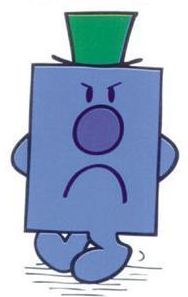
Mister Grumpy

My last email from Andrew of Far too Snug and Twitter fame.  You may remember the other day we spoke of what book shops do with genre fiction and where I would like to be shelved if I was a published author.

I think when you are editing the 12 books you should insert a recurring character. I always meant to do that with a guy called ‘Mister Grumpy’ but I’ve never quite got round to it. This is mainly because when you are trying to sell an individual story to lots of different magazines it doesn’t really make any sense to have a character whose presence is explained in another story.

I think most people write based on an initial idea that develops and snowballs. It isn’t a conscious effort on most people’s parts to think ‘Today I will write a space opera’. However your interests will certainly shape the kind of ideas you have. In your case you have had to do research into the genres you haven’t been as familiar with as others, yes?

Do you feel that writing lots of different genres will actually sharpen your voice, as you will have to find your way of writing each one?

Maybe when you’re published you find yourself having to write a certain way. Madeleine Wickham wrote her  books before finding success with the Shopaholic series under the Sophie Kinsella pen-name, but the latter’s success allowed her to return to her initial interest in writing more Wodehouse-esque novels (which, incidentally, got described as ‘Literary Fiction’ on World Book Night. They seem more like comedies based on the descriptions though).

For example, I have recently read The City and The City by China Mieville and The Raw Shark Texts by Steven Hall. Mieville’s previous books have been fantasy/steampunk, so City… was shelved in that section. Raw Shark… was Hall’s first book, and is shelved in Fiction, but there’s certainly overlap between the two to my mind involving conceptual space and the human mind’s compartmentalising of things. Either could be shelved in the other’s section.

Both are very good, by the by.

With that in mind, would you rather be a popular fantasy author who moved into other territories but still got shelved in the same place, or a critically acclaimed Fiction author who dabbles in other genres?

I think that writing in different genres will challenge me and develop my voice in other ways, yes.  I hope it does, anyway.  And of course the more research I do the more likely that is to happen, because reading other books in the genre gives you an understanding of what works, what doesn’t; what has already been done to death and what might benefit from a different spin being put on it.  The main thing that’s come out of this so far is that I need to spend more time reading and absorbing other people’s stories – I perhaps don’t yet know enough to be as clever about things as Dianna Wynne Jones or Neil Gaiman, but I’ll get there!

I think I’d rather be popular than critically acclaimed, to be honest.  I would like to think people were reading my books because they enjoyed them, rather than because they’d been told by a panel of self appointed experts that it was clever or deep.

I don’t think I’m in too much danger of being critically acclaimed though, because my sense of humour comes through in everything I write and unfortunately I do tend towards the silly.  I would edit things out that looked in danger of becoming too serious or po-faced.  That isn’t to say that I don’t write well or have interesting ideas… but I’d rather be Pratchett than Tolkein.  Although if I come out with anything as good as China Mieville does I’ll be insufferably smug.

I do sort of think I’d get annoyed if I got pigeon holed in one genre, but there again it would depend on what that genre was.  I can’t envision writing the same character for 30 crime books, like Ian Rankin or MC Beaton – but if I was writing fantasy, the nature of the genre might well involve overlapping without having to focus on the same protagonist every time.

Freedom to write and do different things is always nice, because if you open yourself up to new experiences it can give you other viewpoints and ideas that work quite well in separate contexts.  As well as writing fiction I do local news journalism, cultural comment and reviews, and the odd comic or illustration; then when I return to 12 books I’ve got different ideas and perspectives to filter in there on top of specific genre research.  However, if I had a character like Harry Potter or Rebus that people really loved and wanted to hear more about, I can’t imagine that I would say no!

In summary – I would like to be popular and able to dabble in a few different genres, but my main hope is that people enjoy reading what I write.  Preferably enough that I can make a living out of it, one day…

Where Would You Want To Be Shelved?

My conversation with Edinburgh-based writer and tweeter Andrew Blair continues apace today, after a wee little break yesterday.  You may remember that in the last post I asked him what his view was of the BBC’s emphasis on Literary Fiction over all else for their World Book Day coverage, my own view being that it’s a little bit silly because it ignores a vast section of the reading population.

Andrew:

The documentary with Sue Perkins was a bit patronising.  It only really dealt with popular fiction aimed at women and even then managed to assume that this meant nothing more than Chick Lit.

It started with the assumption that Literary Fiction is objectively better, which is flawed. People do not read books based on objective critical analysis. Then an unsympathetic presenter tried not to ask people ‘But gosh, don’t you realise it makes you look thick?’

The next show featured a group of first-time authors of literary fiction and a brief history of the genre. It was amazingly dull, and represented a tiny fraction of the books that we sell. Ignoring genre-fiction for a second, I don’t think Non-Fiction even got a look in.

What’s more, quite a few of the new authors were writing books that were clearly science-fiction, fantasy or crime novels but had apparently managed to find publishers who would market them as literary fiction.

A general rule of thumb I’ve learned from working in a bookshop: if a new book is clearly genre fiction but is going to sell well, it will be moved as quickly as possible to the Fiction section so that everyone who has heard about it won’t have to mingle with the Martina Cole and Joe Abercrombie fans.

12 Books in 12 Months:

*Going into journo mode*

OK, so what’s in your Fiction section, if not genre fiction?  How does a major book retailer approach genres, and does this affect what publishers do?
And as an author of genre fiction, would you expect me and my readers to be looked down on by your litfic clientele?
Andrew:

Fiction is divided along the following lines in my store:

Crime, Sci-Fi/Fantasy, Horror, Dark Fantasy, Romance, Erotica, Classics, Graphic Novels and Manga.

Everything else is under ‘Fiction’. This includes Historical Fiction (which includes Historical Romance if the author is popular enough to make it out from the Romance section), Literary Fiction, Chick-Lit, Modern Classics, Westerns, Popular Fiction, Thrillers and Comedies as well as stories that would happily fall under the smaller genre fiction banners.

So when I say ‘Genre Fiction’ I mean something that would fall outside of a Fiction section in most bookshops (other chains and indies usually shelve things along similar if not identical lines). In ‘Fiction’ you might find The Passage by Justin Cronin, or I am Number Four by James Frey (and some poor bastard he screwed over), and Ishiguro, Niffenegger or Atwood… People who have written Genre Fiction but managed to somehow avoid being shelved there.

The reasons for this, I assume, are to do with marketing and critical reception. Genre Fiction celebrates itself because all the works of Genre Fiction that have won major literary awards have been distanced from Sci-Fi or Fantasy or Crime by their authors. There is a perception of Genre Fiction as being niche, or popular within a certain audience. It cannot win, for it is both populist and niche simultaneously. So there is a stigma for Genre Fiction of being lowbrow and culty, as opposed to highbrow and selective. Then there is simply the fact that more people look at the Fiction Section than the Crime Section, so you want your book to get looked at more.

There are weird associations people have based on genre, shorthands and stereotypes that are propagated by a cyclical set of behaviours of authors and audience. If something is genre but popular, it gets assimilated as being representative. Hence all Dark Romance is brooding supernatural beings ploughing pale young whinos, and all fantasy is witches and wizards going on bloody long walks. Whereas you could quite easily say that The Time Traveller’s Wife sits comfortably in Dark Fantasy. Definitions are more fluid than the Genre Sections allow them to be.

Of course, there are simply books you like and books you don’t. But that’s more difficult to operate as a shelving system.

I mean, how would you deal with it? Would you rather your book be put in the Fiction section if it meant more sales? Do you think Fiction should just encompass all genres? And do you subscribe to the belief that there are just good and bad books, whether they be Literary Fiction or Crime Thrillers?

http://www.bookcountry.com
12 Books in 12 Months:

Before I started this project I didn’t particularly ascribe any of my story ideas to particular genres.  I tended to just write things and see how they came out.  And I think there are probably quite a few books out there where the lines between genres are a little bit blurred.
I suppose if it was up to me as a published author I’d want my books to be shelved in a way that would make people pick them up and have a look.  I’d like to be read by as wide an audience as possible.  But I know from my time working in a library that people do tend to stick to particular genres and indeed writers – if authors continue writing about the same character, so much the better.  It’s just occurred to me I maybe should have overlapped characters between the 12 books – that could have been quite good. Maybe when I get to second draft time!

Are there just good books and bad books?  What a very subjective question!  What you want to read depends on mood, where you are in life, and all kinds of other things. On holiday or in the bath you might want to read something light that you don’t have to think about, on a rainy weekend you might want something completely engrossing and escapist, if you’re miserable you might want something funny…

In addition, depending on your mood, age and whatever, slightly clunky writing can be forgiven when you’ve got a good story on the go, as with Magic Kingdom for Sale, Sold by Terry Brooks.  And well written prose can be really dull – I struggled to get to the end of Arlington Park by Rachel Cusk, but there was nothing technically wrong with it and I’ve enjoyed articles written by her in the past, so I wouldn’t necessarily want to judge all her fiction on the back of the fact that one novel didn’t grab me.

What I hope to do is write engaging characters and storylines across all 12 genres, but I suspect that all 12 of my first drafts are more ‘fiction’ than genre fiction and will require a lot more research and tweaking to market them to fans of the particular genres.  And even then I suspect I’ll have got a few of them wrong…

More Questions

Further questions from Edinburgh-based writer and tweeter Andrew Blair.  I have decided to answer these separately because they’re not really related in any way.

Have you been pleasantly surprised by your research into genre fiction? For example, has Dark Romance proved to be more than pale women kissing vampires?

Truth be told, I wasn’t expecting much from Dark/Paranormal Romance.  I rather thought that most of it had been churned out in a cynical manner to jump on the Twilight bandwagon, and as such I assumed that all such books would be full of unsympathetic teenagers and deeply misogynistic male role models.  My plan was to make the genre readable by imbuing it with my special brand of humour/Scottish realism.

However, I am pleased to report that my suspicions were overly cynical.  The PC Cast excerpts I found online, for example, were much better than expected.  I’d go so far as to say they were entertaining, which is more than can be said for Adventures in Forks as it is seldom known.

Having said that, the main thrust is pretty much pale women kissing vampires.

What do you think of the World Book Night coverage from the BBC, and its putting of Literary Fiction at the forefront?  You remember World Book Night, with Sue Perkins going around hairdressers in Edinburgh and asking people why they hadn’t read Dostoevsky…?

My decision to put off doing Literary Fiction until December was taken at least in part because that meant it was the furthest away.  Putting LitFic at the forefront of anything strikes me as silly, because it automatically alienates a vast section of the reading population who want something a bit more gripping than flowery prose about beautiful landscapes.

I’m not saying I don’t enjoy or appreciate Literary Fiction, but it’s hard going at times.  And I resent the suggestion you get from commentators on some of the programs the Beeb have shown that writing genre fiction means you aren’t as clever or as profound as a literary author – it’s more about storytelling priorities.  Personally, I can forgive a big of unpolished prose if the plot and characterisation keep me interested, whereas LitFic is all about form.

Just out of curiosity, as a writer and bookseller yourself, what do you make of the coverage?

I Have Questions

Further to Monday’s shout out for guest bloggers, for the rest of this week I am answering the queries of Andrew Blair, an Edinburgh-based writer of comedy and other things.  You can see some of his work on this website, or follow him on Twitter @aagb1884.

Tuesday 26/4/11, 08:00

Ali,

I have been reading your blog sporadically. I have questions.

Number 1. You are writing in 12 different genres. This is not a question. What genres of books do you predominantly read and have you enjoyed the experience in researching others? That is a question.

Andrew

Tuesday 25/4/11, 13:01

Andrew,

I don’t really have a favourite genre, although I lean towards books with a sense of humour and quite like things with a fantastical element.  I also like a lot of YA and kids books, and Scottish fiction.

To give some examples: some of the best and funniest books I’ve ever read are the Mr Gum series by Andy Stanton, which I’d recommend to anyone (even though they’re really aimed at 8 year olds).  Meanwhile in fantastical terms, I go from the very dense prose of Isabel Allende to Neil Gaiman‘s Sandman graphic novels with a bit of future dystopia from Aldous Huxley or Margaret Atwood along the way.

In terms of YA, I’ve recently enjoyed stuff by Holly Black and Gemma Malley, as well as The Gates by John Connolly who started out writing adult crime novels.  You can read the first chapter on his website, and I think it’s awesome.

Great kids books I’ve read lately include The Girl Who Could Fly by Victoria Forrester and The Secret Benedict Society by Trenton Lee Stewart.  I’d also recommend Steve Augarde‘s ‘Touchstone Trilogy’ which is suitable for 11+.  Good Scottish novels include The Ossians by Doug Johnstone and The Incredible Adam Spark by Alan Bissett, and anything by Muriel Spark…  Essentially I like to think I’ll give anything a go, and as such my ‘to-read’ list is very, very long.

In terms of research for 12 books, so far I have probably enjoyed the romance month the most because the genre is often unintentionally very funny.  It’s quite rare to find a romance book that is genuinely romantic, I think partly because a lot of authors tend to get caught up in sex scenes – one of the reasons why I decided to go for unrequited love, actually – and these are notoriously difficult to write well.

Ali

To Plan Or Not To Plan?

Further to yesterday’s shout out for guest bloggers, Captain Fantastic writes:

Ali,

I read on the blog that you are shamelessly trying to spin out more books than Sir Terry of Pratchett. For someone that’s spent many a year dreaming of writing an epic fantasy novel, yet produced less than diddly squat, I’m wondering how you get going with the process each time you start a new book.

I’ve read lots of different guides on how to get started writing, but everything I read says to start by planning the plot, or the characters. I’ve tried both and failed – horribly. The planning really bores me – like reading the Silmarillion – it’s dry and dusty and it takes forever. I really want to just spew out the random jumble of words in my head and weave them into a story as I go, but everything I read says ‘no! bad dog! Start by planning, plot, characters, themes, snore, snore, snore, ya-de-ya – have a biscuit’. I probably shouldn’t look for guidance in dog books…

I was wondering then, how do you plan your writing. Do you do anything to keep the planning side of things interesting or do you just leap right in and start writing? How do you make the actual writing process itself fun so that it’s not a chore to sit down and churn out 2000 words in a day? Any thoughts?

Fantastic Regards

The Captain

Tuesday 25/4/11

Dear Captain,

The only book I have really planned thus far was the one I wrote for NaNoWriMo last year.  And even then, the ‘planning’ consisted predominantly of  reading a few books in my chosen genre, then choosing 30 cliffhangers and assigning them to different chapters.  I knew what the two main characters were called before I began, but I added everyone else in as I went along and got to know them as I wrote them.

Book One of this project, Caligula’s Blog, was planned in the sense that I read some history books and had a rough time line of Caligula’s life, and I tried to write according to that – but exact details are a bit woolly when your get that far back so it wasn’t done with military precision.

I tend to take the view that if you are bored with what you’re doing – especially at that early stage – the reader will be too.  When I planned out that first book, I couldn’t wait to start writing it, and doing so was much easier than the ill-considered NaNo attempt of 2009.

Kids author Andy Stanton makes chapter planning interesting... Or silly, at any rate. http://ow.ly/user/AndyStantonTM

With 12 Books, part of me tends to feel like there’s no time for planning (other than thinking about it in my head a bit!), so I’ve been inclined to jump in and start on the first of the month – either at a point I am looking forward to doing, or a cursory opening scene just to get something out there.  So far none of the openings I’ve written have stayed at the start for long, but they help me to get into the new story.

I think there’s a danger that if you plan too much you’ll overthink it, which is why the overarching theme of this project is to get something on paper and worry about continuity and plot holes later.  Once you have that first 50k in front of you, it’s got to be easier to plan the next 50k than if you’re still stuck faffing about with outlines.  And you may well see that themes and things have started to appear of their own accord, merely needing you to hone them a bit.

Having said all that, I do think having an outline can help you keep on track, as there are one or two problems with jumping straight in.  Frinstance:

– You occasionally find you’ve written the same thing more than once.

– Sometimes you can get quite far in and then change your mind about something, or find it tails off unexpectedly, so you end up having to lose chunks of what you’ve written.  But honestly I think that would happen with any first draft, because by the time you’ve done 50k+, left it a couple of months, and come back to it with fresh eyes, you’re going to have come up with new ideas, better ways of putting things, and so on.

– Jumping right in can mean you can lose sight of what you wanted to do.  With book 3, I thought I had a very clear idea in my head, but I hadn’t written it down in any detail. Immersed in the tale, I got to around 20k, but then unexpectedly got stuck.  I ended up breaking my ‘no editing’ rule and going back to read over it properly and change the chapters around.  That helped me to decide on a direction, and I didn’t need to lose any of it – but I can’t guarantee that result every time, and on that occasion fell very short of the arbitrary word count goal!

As a general rule with 12 books I decided to write and write until I get to 50k – even if I know some of it is nonsense.  After all it’s a first draft which is going to be severely edited – first by me and then by long suffering friends who’ll be asked to read it over before sending it to an agent who’d presumably make further suggestions before sending it to a publisher.  There’s just no need to get bogged down in detailed planning at this stage, because when you get going you’ll almost certainly change your mind about at least a couple of things.

In answer to your last point, this means keeping things fun isn’t that hard at this stage.  The process of coming up with first drafts is arguably one of the funnest, most creative parts of writing a novel.  It’s the point where you can try things out, and it’s a bit of a challenge getting to that 2000 words a day which is enjoyable as long as you don’t let it become a stress or something YOU MUST DO at the cost of all else.  The editing process, on the other hand, is far more laborious – that’s where writing becomes a job, and it’s how I reckon authors really earn their keep!

Hope this answers your question, and best of luck with the fantasy epic!

Ali

Be Part of this Blog

I have had an idea to make this process a little more interactive, but in order for it to work I need the help of YOU, The Public.

Do you have a spare 15-30 minutes a day?

Would you be able to dedicate those minutes to sending me a short email asking about 12 Books in 12 Months?  Perhaps you have a passing interest in the writing process, where I get my inspiration, this month’s genre, or how I wear my hat?

I would like one guest emailer a week to enter into a correspondence.  They email me a query or a challenge, I email back, and so on – then the resulting dialogue goes onto the blog for all to see, alongside any links or promotions the other party wishes to promote.

(For those in the know, this is essentially the same premise as The Writer’s Tale, but with several Ben Cooks playing opposite my Russel T Davies, and no publishing deal immediately obvious.)

Here is an example of what I mean:

Monday 25/4/11 10:53
benedict_cumberchild@domainname.net

Ali,

12 books in 12 months?  Are you mental?

Kind Regards,

BC

Monday 25/4/11 16:22
ali.george85@yahoo.com

Dear BC,

No, I am not mental.  I have been writing books and stories since I was a tot, because I find it fun.  I can see how writing a book a month for a year might make it less fun, because it’s an awful lot of words and takes over a large amount of time.  However, I am very consciously not editing as I go because there isn’t time, and since editing is probably the hardest part of the writing process, that helps relieve stress.

I’m also changing genre every month so that I don’t get bored.  And I am accepting challenges and suggestions from You The Public to incorporate into each book, which keeps it fun and a bit different.

Ali

Tuesday 26/4/11 13:15
benedict_cumberchild@domainname.net

Ali,

I read on the blog that the fact you aren’t editing as you go is the reason why you aren’t making the books available for us to see at the end of each month.  That’s fine, but how do we know you’re actually writing them at all?

BC

ali.george85@yahoo.com
Tuesday 26/4/11 22:05

BC,

That is one part of the reason – as you can see from my first novel, published in all its original draft glory, it’s engaging in parts but occasionally loses the plot a bit.  Well, a lot.  But there is also the point that as part of book 13, The One About Writing Twelve Books in Twelve Months, I am going to include stuff about the editing process, and trying to get publishers and agents interested.  I’m also going to have a bash at self publishing one of them.  Something tells me that nobody will want to buy them if they’re already available for free download.

In response to the ‘how do we know you’re writing them at all question’ – ask my partner and friends how many times I’ve said no to social engagements ‘because I’ve got to get some writing done’ over the past few months!  You can also regularly read and hear excerpts of the work in progress on the blog.  Plus, if I was faking, I’d probably come up with slightly more impressive word counts…

Ali

Wednesday 27/4/11 09:01
benedict_cumberchild@domainname.net

OK, so what happens if you don’t get any of them published?  And what is the deal with word counts?

BC

Wednesday 27/4/11 12:45
ali.george85@yahoo.com

If I don’t get any of them published, the edited versions will be made available for free download, hopefully at some point next year – although the editing process takes a lot longer than initially bashing out the first draft so I can’t give you any exact dates as yet.

As to word count, the general aim is to try and reach 50, 000 words per month.  This is based on the target set by National Novel Writing month.  It’s about the length of a comparatively short paperback – think in terms of the early Darren Shan books.  I read somewhere on the internet that the average first novel is around 72,000 words – books thicker than that are harder to get published if you are a first time author because retailers are concerned they won’t be able to shift you as a relative unknown, and their shelf space is valuable.  However, I’m not going to beat myself up if I don’t reach 50k because frankly, I have a lot of other stuff going on.

Ali

Thursday 28/4/11 00:14
benedict_cumberchild@domainname.net

What stuff do you have going on?  Surely nobody has time to do a project like this and also maintain a life?  I would love to write a book one day, but I know that realistically I don’t have the time.

BC

Thursday 28/4/11 07:45
ali.george85@yahoo.com

I work 4 days a week and in the other 3 am trying to build up a career as a freelance journo, which involves a lot of pitching articles to editors and volunteering my services at websites including The Edinburgh Reporter, STV Local, IdeasTap, IWeTwoThree and others listed here.  I also volunteer for a music website called Ten Tracks, doing the blog, ad hoc admin and occasionally helping on the door at gigs.

Generally speaking the thing that suffers as a result of all this is my sleeping pattern.  However, I regard it as being worth it on the grounds that if I can build a name as a freelance, the 4 days a week currently spent temping can gradually become 3, then 2, and one day I might even be able to cover my rent and bills through writing alone – be it fiction, journalism, or a mixture of the two.  It’s not as if I have more time than other people, it’s more a question of what I choose to do with it.

Ali

Friday 29/4/11 16:50
benedict_cumberchild@domainname.net

Sounds like a lot to take on board.  So how will you spend your Friday night?  Writing?

BC

Friday 29/4/11 18:00
ali.george85@yahoo.com

Maybe.  Sometimes I’ll combine socializing with journalism, eg I’ll go to a gig or whatever and then write it up for a website.  It’s weird, journalism is almost a form of procrastination before doing 12 books now.  It’s quicker to conduct a phone interview and type it up than to write a book, after all – and there are deadlines on articles, whereas the books are done as a personal choice.  Then there’s blogging, which is the form of procrastination that comes before journalism.  On weeks where my personal blog has been updated every day, there’s a possibility that there was an article I should have been writing that I left to the last minute.

Having said that, I do try to have at least one relaxing evening at the weekend.  I think I’d go a bit nuts otherwise.

Ali

Or something along those lines.  If you would like to play the part of BC, email ali.george85@yahoo.com, or drop me a comment either here or on the Facebook page.

Emails can be as long or as short as you like and you can ask me anything at all – although I reserve the right to ignore anything inappropriate and am unlikely to respond to Nigerian princes who want to deposit $1 million in my bank account.  I’ve been burned before.

Blog at WordPress.com.

Up ↑