Search

12 Books in 12 Months

writing books and blogging about it

Category

writing

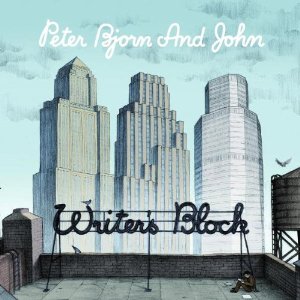
Writer’s Block

My last email from Edinburgh blogger Elaine from Dreams and Whispers covers the tricky subject of the creative block…

My last question is about creative writing in general, and blocks that can hinder creativity -for example perfectionism, comparing your work to others, an internal critical voice, etc. Personally I got stuck when I attempted Nanowrimo last year: I’d think “Ugh, that last sentence was horrible, I can’t possibly leave that in. I’ll just go over that for a second…”, then suddenly a whole paragraph would be edited and the word count would actually reduce! So my question for a prolific writer like yourself is: do you ever get stuck with “writer’s block” and if so, what helps you move past it?

I think everyone gets creatively blocked from time to time.  I’ve lost count of the number of blog posts and tweets I’ve read that claim sitting in front of an empty page or screen is the hardest part of the writing process.  But to be honest, I don’t find it to be as much of a problem as I used to.  I found it incredibly hard to write fiction when I was at uni and only finished a few things. For those four years I blogged (although not as regularly as now) and did journalism (mainly singles reviews and occasional comment pieces) and spoof news stories for the uni satirical paper… but I rarely finished any stories.

After graduating in 2008 I continued that trend for a bit.  By that point I had sort of decided that my fiction style was a bit too flippant or glib for anyone to really care about, but I continued with blogging and started to write news stories and stuff for hyperlocal websites.  So yeah, I have been known to go ‘no, I can’t do it, and even if I did have an idea I wouldn’t do it justice..’

So I merrily continued with short articles and blog posts till November 2009, my first go at NaNoWriMo.  What I liked about NaNo was that they recognise this tendency people have to lose confidence in what they’re doing, like me, or as you mentioned in your email, to start but then sit and get stuck, re-reading and editing and worrying about it all  and never getting anything done and eventually giving up and moving on to something else.  As you know, that is why they set the 50k in 30 days challenge – the idea being that you do not physically have time to stop and go back over stuff because you have to get at least 1,667 words written every day as well as going about your daily business.  In order to get there you need to accept that a certain amount of stuff will in all likelihood not be very good, and do it anyway – you can go back and fix it later.
Although I didn’t finish in 2009 because work was insane, I got about 15k done and I think I was cured of the notion I’d developed that fiction wasn’t for me.  I also had a strong sense that I probably would have finished if a couple of specific and relatively unusual incidents at work hadn’t got in the way.  Which is good, because the whole time I was growing up “author” was one of my top career choices, refined to “children’s author” when I went to high school.  Then when I reached the age of 15 and realised “author” was unlikely to be my first job, I decided to go for “journalist” and then segue once I had ten years or so of writing for a living under my belt.

NaNo 2010 cured me completely I think.  I guess I’d been resolving to do it for a year, mulling over these ideas of not editing and just writing anything that comes to mind, so by the time it came around it didn’t even occur to me to read back over what I’d done already!  I do genuinely think of editing as a totally separate entity to the initial writing process now, and with 12 books I quite often don’t read back over anything at all.  In fact there are only two scenarios when I read things over again: when I haven’t written for a day or two and can’t quite remember where I left off, or when I’m putting an excerpt on the blog – because I do read back over blog posts and edit them a bit before putting them up.

It also reminded me not to take myself too seriously.  There is no freaking way that the first draft of any novel is going to be the next Moby Dick, War and Peace, or whatever, regardless of how much you’ve planned and researched.  There’s no point in panicking because it isn’t perfect, because if you’re going to give up after the first draft you probably aren’t that passionate about it.  Crafting something literary takes time and effort – writing is a job and you have to work at it.  And anyway, those aren’t the sorts of things I want to write – you remember I said I convinced myself nobody would want to read my stories because they tend towards the silly or glib – but then I thought actually, I’d read them.  I like books that make me laugh, and I can’t be the only one.  Otherwise Terry Pratchett would be out of a job.

12 books has continued the good work of NaNo in helping with creative blocks.  It means I have to force myself to write, to the extent that it feels odd if I haven’t done anything that day, and when I get into the way of it I can get a lot done in one sitting – my WPM has definitely got quicker over the past few months!  And because I’m doing one a month, plus a lot of other short articles at the same time for other blogs and websites on different topics, I never have the chance to get bored with any of them.  I still get frustrated, but that’s often as much because I know exactly how I would fix things if I had the time to do a bit more research or whatever.

Trying to publicise it has also forced me to talk about what I’m doing, which can help a lot when you’re stuck.  I used to be very anxious about sharing anything before it was finished – I couldn’t even sit next to my boyfriend writing out a blog post on my laptop because I felt like it was raw and unfinished and if he happened to read any over my shoulder he would be thinking ‘well that isn’t very good’.  He wouldn’t, of course, but I was paranoid anyway.  But with 12 books I have to talk about it so that people will give me suggestions, and I’ve done a couple of interviews with local news sources about it too, which has helped me lose that fear of somehow failing or people thinking badly of me.  And also, talking about a story and the problems you’re having with it out loud quite often gives you ideas of how to fix it yourself, even before other folk jump in with their suggestions.

The other thing that helps creative blocking is reading lots.  I know it can make you despair at times because you feel there’s no way you’ll ever be as good as whichever author has captured your imagination on any given day, but it can also help you decide who to emulate and who to avoid, it gives you ideas about how you would approach something, and it all feeds in to the imagination lobe of your brain (I don’t think it’s called that but there must be a bit that deals with that type of stuff) and stews in there and recycles itself into new ideas and a better writing style.  It can also make you insanely jealous that someone else has created something so awesome, which can be quite motivational :p

The main thing I would say though is to never ever beat yourself up about not having written anything.  If I was doing that this project would have been over before it began.  Feeling a bit blocked is fine and normal, and it’s OK to give yourself a few days off.  The thing about writing is that even when you aren’t physically doing it, ideas are probably floating around in the back of your mind, whether you’re conscious of them or not.  It’s alright to not get anything down for a while.  But, if you suspect that it’s less a case of not having anything to write and more about being lazy, then just sit down and start.  Start in the middle, or at the end, or with a generic ‘Once upon a time’, and write whatever the hell comes into your head, for at least ten minutes.  Chances are you’ll get into it and keep going for longer than that.  Don’t worry that you have nothing to say – everyone has something.  Something they like or hate, or that they think everyone else should know about; a terrible secret of their own or someone else’s; a funny anecdote; a hope or aspiration.  And if it turns out when you’ve written a few hundred words that actually that isn’t what you wanted to say, that’s OK.  It’s a first draft and it’s up to you whether anyone ever gets to see it.  Just don’t delete it till you’ve gotten the thing you actually meant to say out there on the page.  And backed up.

Which One Will You Choose..?

It’s the third day of questions courtesy of Elaine from the Dreams and Whispers Blog, and she asks something I’ve never really thought about before… to choose which of my children I love the most!

Today’s question is about the characters in your books. For me as a reader, I find that interesting characters can really make a book brilliant. With you being on your fifth book now, you must have invented and thought about a fair few people, so which of them stand out the most – which two have been your favourite and least favourite so far?

I agree with you that characterisation can make or break a book.  Good characters stay with you and you want to find out more about them – this is presumably why so many authors write in series.  Whereas bad ones can make it difficult to carry on reading (although I’m pretty tenacious – it’s rare that I don’t drag my way kicking and screaming to the end of a book).

So far my favourite character is probably Caligula, if I can legitimately claim him as a character!  I enjoyed trying to get into his mind and second guessing why he did the crazy things that he was meant to have done – that’s the revisionist historian in me trying to come out, I think.  The sources on Caligula are fantastically biased but it makes for interesting reading.

I have a lot of affection for Victor McGlynn as well – he was the main character in the Western and I gave him quite a rough time of it with a pretty sad back story and a not amazing here and now, but he coped with dignity!  I am also really looking forward to writing the main characters in my kids’ book in July, because I’ve been developing them in my head for about two years.

There aren’t any characters I haven’t enjoyed writing at all, but I suppose my least favourite is Jennifer, the protagonist of the last book.  This is partly because I swithered an awful lot over how to write her – this has been the most difficult book so far.

I was trying to write her as a stroppy teenager but I think I may have gone a bit overboard with her lack of empathy and self involvement, so I’ll have to sort that out when I go back to edit it!  Think I should make her a bit more likeable!  Although having said that, Stephanie Meyer didn’t bother making Bella likeable and she did alright.  Maybe I’ll just leave it….

Inspiration

A second email from Elaine of Dreams and Whispers fame.

Next I would like to find out a bit more about your inspiration for the twelve books – did you already have ideas before you started, or are you taking it book by book and seeing what develops for each one? As you write, do you find that most of your theme/plot/character ideas are coming from things you encounter in life, people you meet, your imagination, or somewhere else?

I had a few ideas before starting, many of which are laid out on the ‘Get Involved‘ page and in the Facebook photo album.  I went into it with the hope that members of the public would challenge me by giving me different suggestions to incorporate as I went along, giving the project a more interactive feel but also forcing me to plan things so that I’d include all their ideas.

As it happens, I think a lot of people find it intimidating to have me say ‘just suggest anything at all’.  For instance with book 2, where I got suggestions from staff at The Byre Theatre in St Andrews, basically everything I got was anecdotal stuff about working in a theatre.  Nobody seemed interested in motive, murder weapon, or red herrings, and I ended up going on Twitter when I’d already started writing to ask people to suggest names for characters I’d just invented.  This meant that the book developed much more out of my own brain than I think I expected.

At the other extreme, with the Western story I got a very in depth story suggestion from someone, but I ended up not using it because it would have required an awful lot of historical research on my part – the suggester obviously knew quite a bit of the history of the west and had some very specific ideas, which frankly I felt a bit dodgy about using!  So hopefully he will write it himself one day!  It helped me though, because when I read it I realised that a traditional story like that was the exact opposite of what I wanted to do, and came up with what I think was quite a strong idea to work from.

For paranormal romance I think the only suggestion I got was a name and occupation for the central character.  I used the name, Jennifer, but changed the occupation very slightly.  I hadn’t planned for it to be paranormal to begin with, and was hoping to do quite a bittersweet story.  I changed my mind to challenge myself – I’ve never quite got the appeal of paranormal romance and have slagged it off a bit, so I thought why not put my money where my mouth is and see if I can do any better.  With all that dithering, though, it probably wouldn’t have made a difference if people had suggested things or not – I had a definite, but at the same time very woolly, plan!

This month is fantasy, and I’ve had a couple of pretty good suggestions for that – clearly it’s a genre that readers of this blog can relate to!  But even then they’re basically character suggestions, so it’ll be me that thinks of the plot, dialogue, narrative and so on.  That sounds like a complaint – it isn’t!  I love making things up – this would be a very strange project to be doing if I didn’t.

I am definitely taking it book by book.  I have to, really.  So far there hasn’t been time to plan any further ahead than that, and in most cases I’ve not even written an outline till I’ve got about 20k in.

None of my characters are directly based on anyone real, but there are elements of dialogue and characterisation which do draw a lot from encounters I’ve had or exchanges I’ve heard in real life.  The first line of my first book, for instance, was, “Nah mate, that’s lies!” because it was something I heard every single day from the kids that came in to my place of work.  For some reason most of my settings have been Scotland so far as well, although that was quite unintentional.

Having said that, I don’t think there’s a huge amount of point in ‘writing what I know’ verbatim.  I recently read an interview with Susan Hill in Mslexia Magazine where she pointed out that the whole point of reading fiction was to escape from the mundanity of every day life, so of course you should write everything from the imagination.  Who really cares about a character who is trying to make it as a freelance journalist whilst also writing fiction and occasionally arguing with her boyfriend about whose go it is to do the dishes?!  But occasionally real stuff bleeds through – hopefully funny, insightful or interesting things, though!

My Daily Routine (or lack thereof)

In my ongoing quest to integrate You The Public more fully in the 12 Books process, this week I am answering questions from Elaine, who takes lovely photos and blogs over at Dreams and Whispers.

Elaine writes:

Firstly, I would like to know how you manage to fit so much writing into your daily routine! Do you find you can write better at certain times of the day, or do you stay up late to catch up with it? Do you need a quiet space and clean desk, or can you type amongst noise and chaos?

To be honest, I don’t always fit writing into my routine!

When I did that first book for NaNoWriMo last year I was working in Dalkeith and living in the New Town, which meant I was commuting an hour either way every day.  All I needed to do then was write on my phone when I was on the bus, so most days I found I’d reach my daily word count before I even got home.  It was mega easy to keep on top of it then because it was just part of my routine.

In January, the legendary time that 12 Books began, I was off work all the time because I was house sitting for my parents for two weeks and my temp agency didn’t have any work that only lasted the fortnight I was available.  This meant that theoretically I had all the time I could possibly need to get into a routine, but in actual fact days went by where I didn’t write anything – although I was researching a lot (that first book, Caligula’s Blog, involved quite a lot of reading of history books on account of the fact I didn’t know a huge amount about Caligula).   There were a few days where I sat and did massive chunks of around 5k at a time to make up for it.

February was not a lot better in terms of routine, because my temp agency didn’t have anything for me till nearly the end of the month.  However there were days I didn’t do much because I was a bit depressed – I really hate being unemployed, not least because it means you have to live on cheese sandwiches or other similarly cheap foodstuffs, but also because being unemployed in a grey Edinburgh February in the coldest flat known to man… Well, it wasn’t conducive to 100% creativity.  On the days I did write, though, I was doing vast swathes – I think the most I did in one day was about 7k.  Which is a lot to do in one go and I dread to think what I’ll make of it when I go back to edit.

In March and April I had the luxury of being in the same job the whole time, and I’ll be in the same one for May and June too. The wonders of temping.  This means I work 4 days a week and have 3 off.  However, because my workplace is within walking distance of my house (about 1.5 miles), I don’t have commuting time to write, and depending on how busy we are it can take quite a lot out of you so that when you get in at night you don’t particularly want to hunch over Word on your own in the bedroom.

What I try to do is write during my breaks – the time everyone else in the office goes on Facebook! – and on Mondays and weekends, pending social engagements and what have you. But because I do a lot of other stuff too (writing for various websites being the main thing) I’ve found that admin Monday and random times at the weekend isn’t really enough, so today I’ve sat down and planned out my time in as detailed a way as I can manage, with the specific aim of incorporating both writing and reading time every day.  I doubt whether I’ll stick to it religiously, but I’ll try!

I sometimes have a dedicated workspace, but it’s our spare room and currently my sister is staying in it.  Over the past month or two I’ve just worked wherever I can – often sitting cross legged on the bed which is doing my back no favours, or at the kitchen table which is better but opens me up to the distraction of chatting to housemates about the latest developments on Judge Judy.  (In case you’re interested, there are no new developments on Judge Judy – it’s the same every single time.)

It’s definitely easier to get stuff done in a quiet, dedicated area, but if that’s not possible I find that even going along to a coffee shop can help me get stuff done –  particularly if you resist the temptation to ask for the wifi password!  I am pretty adept at tuning out noise and chaos, but it’s harder when writing fiction.  I can edit an interview together or draw a picture in front of the telly; sometimes I can tune it out enough to do blog posts and job applications; and other times I can even tune it out enough to read a book, but I can’t write fiction like that at all.  Stories definitely require me to curb my multi-processing ways to an extent.  I can zone out the hubub of background conversation in a coffee shop, but not the laughter track on Friends.  Not sure why.

In terms of best time of day to write, I’d be inclined to say I work better either first thing in the morning or last thing at night… but I do have the odd burst of afternoon brilliance ;p  When I wake up on a weekend at 8.30am or some such annoyingly respectable time, I’ll quite often bash out 2000 words or so and then faff about for basically the rest of the day.  Well, not faff exactly, but I’ll do blog posts and set up interviews for sites I volunteer for, and I’ll go on Twitter and read links to tips for authors or weary articles about the current state of publishing; or do other writing related things that are relevant but could realistically wait till later.

Then during the week, when I come in from work I’ll be tired and find myself doing lots of other boring domestic stuff and suddenly at 9.30 I’ll be ready to do an article or some novelling and I’ll carry on with it till midnight.  Then I’ll be grumpy cause I won’t get enough sleep.  Oops.

Still, only 8 months to go!

Mister Grumpy

My last email from Andrew of Far too Snug and Twitter fame.  You may remember the other day we spoke of what book shops do with genre fiction and where I would like to be shelved if I was a published author.

I think when you are editing the 12 books you should insert a recurring character. I always meant to do that with a guy called ‘Mister Grumpy’ but I’ve never quite got round to it. This is mainly because when you are trying to sell an individual story to lots of different magazines it doesn’t really make any sense to have a character whose presence is explained in another story.

I think most people write based on an initial idea that develops and snowballs. It isn’t a conscious effort on most people’s parts to think ‘Today I will write a space opera’. However your interests will certainly shape the kind of ideas you have. In your case you have had to do research into the genres you haven’t been as familiar with as others, yes?

Do you feel that writing lots of different genres will actually sharpen your voice, as you will have to find your way of writing each one?

Maybe when you’re published you find yourself having to write a certain way. Madeleine Wickham wrote her  books before finding success with the Shopaholic series under the Sophie Kinsella pen-name, but the latter’s success allowed her to return to her initial interest in writing more Wodehouse-esque novels (which, incidentally, got described as ‘Literary Fiction’ on World Book Night. They seem more like comedies based on the descriptions though).

For example, I have recently read The City and The City by China Mieville and The Raw Shark Texts by Steven Hall. Mieville’s previous books have been fantasy/steampunk, so City… was shelved in that section. Raw Shark… was Hall’s first book, and is shelved in Fiction, but there’s certainly overlap between the two to my mind involving conceptual space and the human mind’s compartmentalising of things. Either could be shelved in the other’s section.

Both are very good, by the by.

With that in mind, would you rather be a popular fantasy author who moved into other territories but still got shelved in the same place, or a critically acclaimed Fiction author who dabbles in other genres?


I think that writing in different genres will challenge me and develop my voice in other ways, yes.  I hope it does, anyway.  And of course the more research I do the more likely that is to happen, because reading other books in the genre gives you an understanding of what works, what doesn’t; what has already been done to death and what might benefit from a different spin being put on it.  The main thing that’s come out of this so far is that I need to spend more time reading and absorbing other people’s stories – I perhaps don’t yet know enough to be as clever about things as Dianna Wynne Jones or Neil Gaiman, but I’ll get there!

I think I’d rather be popular than critically acclaimed, to be honest.  I would like to think people were reading my books because they enjoyed them, rather than because they’d been told by a panel of self appointed experts that it was clever or deep.

I don’t think I’m in too much danger of being critically acclaimed though, because my sense of humour comes through in everything I write and unfortunately I do tend towards the silly.  I would edit things out that looked in danger of becoming too serious or po-faced.  That isn’t to say that I don’t write well or have interesting ideas… but I’d rather be Pratchett than Tolkein.  Although if I come out with anything as good as China Mieville does I’ll be insufferably smug.

I do sort of think I’d get annoyed if I got pigeon holed in one genre, but there again it would depend on what that genre was.  I can’t envision writing the same character for 30 crime books, like Ian Rankin or MC Beaton – but if I was writing fantasy, the nature of the genre might well involve overlapping without having to focus on the same protagonist every time.

Freedom to write and do different things is always nice, because if you open yourself up to new experiences it can give you other viewpoints and ideas that work quite well in separate contexts.  As well as writing fiction I do local news journalism, cultural comment and reviews, and the odd comic or illustration; then when I return to 12 books I’ve got different ideas and perspectives to filter in there on top of specific genre research.  However, if I had a character like Harry Potter or Rebus that people really loved and wanted to hear more about, I can’t imagine that I would say no!

In summary – I would like to be popular and able to dabble in a few different genres, but my main hope is that people enjoy reading what I write.  Preferably enough that I can make a living out of it, one day…

Where Would You Want To Be Shelved?

My conversation with Edinburgh-based writer and tweeter Andrew Blair continues apace today, after a wee little break yesterday.  You may remember that in the last post I asked him what his view was of the BBC’s emphasis on Literary Fiction over all else for their World Book Day coverage, my own view being that it’s a little bit silly because it ignores a vast section of the reading population.

Andrew:

The documentary with Sue Perkins was a bit patronising.  It only really dealt with popular fiction aimed at women and even then managed to assume that this meant nothing more than Chick Lit.

It started with the assumption that Literary Fiction is objectively better, which is flawed. People do not read books based on objective critical analysis. Then an unsympathetic presenter tried not to ask people ‘But gosh, don’t you realise it makes you look thick?’

The next show featured a group of first-time authors of literary fiction and a brief history of the genre. It was amazingly dull, and represented a tiny fraction of the books that we sell. Ignoring genre-fiction for a second, I don’t think Non-Fiction even got a look in.

What’s more, quite a few of the new authors were writing books that were clearly science-fiction, fantasy or crime novels but had apparently managed to find publishers who would market them as literary fiction.

A general rule of thumb I’ve learned from working in a bookshop: if a new book is clearly genre fiction but is going to sell well, it will be moved as quickly as possible to the Fiction section so that everyone who has heard about it won’t have to mingle with the Martina Cole and Joe Abercrombie fans.

12 Books in 12 Months:

*Going into journo mode*

OK, so what’s in your Fiction section, if not genre fiction?  How does a major book retailer approach genres, and does this affect what publishers do?
And as an author of genre fiction, would you expect me and my readers to be looked down on by your litfic clientele?
Andrew:

Fiction is divided along the following lines in my store:

Crime, Sci-Fi/Fantasy, Horror, Dark Fantasy, Romance, Erotica, Classics, Graphic Novels and Manga.

Everything else is under ‘Fiction’. This includes Historical Fiction (which includes Historical Romance if the author is popular enough to make it out from the Romance section), Literary Fiction, Chick-Lit, Modern Classics, Westerns, Popular Fiction, Thrillers and Comedies as well as stories that would happily fall under the smaller genre fiction banners.

So when I say ‘Genre Fiction’ I mean something that would fall outside of a Fiction section in most bookshops (other chains and indies usually shelve things along similar if not identical lines). In ‘Fiction’ you might find The Passage by Justin Cronin, or I am Number Four by James Frey (and some poor bastard he screwed over), and Ishiguro, Niffenegger or Atwood… People who have written Genre Fiction but managed to somehow avoid being shelved there.

The reasons for this, I assume, are to do with marketing and critical reception. Genre Fiction celebrates itself because all the works of Genre Fiction that have won major literary awards have been distanced from Sci-Fi or Fantasy or Crime by their authors. There is a perception of Genre Fiction as being niche, or popular within a certain audience. It cannot win, for it is both populist and niche simultaneously. So there is a stigma for Genre Fiction of being lowbrow and culty, as opposed to highbrow and selective. Then there is simply the fact that more people look at the Fiction Section than the Crime Section, so you want your book to get looked at more.

There are weird associations people have based on genre, shorthands and stereotypes that are propagated by a cyclical set of behaviours of authors and audience. If something is genre but popular, it gets assimilated as being representative. Hence all Dark Romance is brooding supernatural beings ploughing pale young whinos, and all fantasy is witches and wizards going on bloody long walks. Whereas you could quite easily say that The Time Traveller’s Wife sits comfortably in Dark Fantasy. Definitions are more fluid than the Genre Sections allow them to be.

Of course, there are simply books you like and books you don’t. But that’s more difficult to operate as a shelving system.

I mean, how would you deal with it? Would you rather your book be put in the Fiction section if it meant more sales? Do you think Fiction should just encompass all genres? And do you subscribe to the belief that there are just good and bad books, whether they be Literary Fiction or Crime Thrillers?

http://www.bookcountry.com
12 Books in 12 Months:

Before I started this project I didn’t particularly ascribe any of my story ideas to particular genres.  I tended to just write things and see how they came out.  And I think there are probably quite a few books out there where the lines between genres are a little bit blurred.
I suppose if it was up to me as a published author I’d want my books to be shelved in a way that would make people pick them up and have a look.  I’d like to be read by as wide an audience as possible.  But I know from my time working in a library that people do tend to stick to particular genres and indeed writers – if authors continue writing about the same character, so much the better.  It’s just occurred to me I maybe should have overlapped characters between the 12 books – that could have been quite good. Maybe when I get to second draft time!

Are there just good books and bad books?  What a very subjective question!  What you want to read depends on mood, where you are in life, and all kinds of other things. On holiday or in the bath you might want to read something light that you don’t have to think about, on a rainy weekend you might want something completely engrossing and escapist, if you’re miserable you might want something funny…

In addition, depending on your mood, age and whatever, slightly clunky writing can be forgiven when you’ve got a good story on the go, as with Magic Kingdom for Sale, Sold by Terry Brooks.  And well written prose can be really dull – I struggled to get to the end of Arlington Park by Rachel Cusk, but there was nothing technically wrong with it and I’ve enjoyed articles written by her in the past, so I wouldn’t necessarily want to judge all her fiction on the back of the fact that one novel didn’t grab me.

What I hope to do is write engaging characters and storylines across all 12 genres, but I suspect that all 12 of my first drafts are more ‘fiction’ than genre fiction and will require a lot more research and tweaking to market them to fans of the particular genres.  And even then I suspect I’ll have got a few of them wrong…

Blog at WordPress.com.

Up ↑